
Understanding Co-pays and Co-insurance in Health Plans-www.waukeshahealthinsurance.com-www.waukeshahealthinsurance.com
Understanding these concepts is crucial for making informed decisions about your health insurance coverage and budgeting for healthcare expenses.
:max_bytes(150000):strip_icc()/dotdash-coinsurance-vs-copay-why-you-need-know-difference-final-e570a197e19f4ea58eca928ad5a47c1d.jpg)
What is a Co-pay?
A co-pay, short for "co-payment," is a fixed amount you pay for a covered healthcare service at the time of service. This amount is typically a relatively small, predetermined fee, regardless of the total cost of the service. For example, your co-pay for a doctor’s visit might be $25, while a specialist visit could be $50. Co-pays are usually paid directly to the healthcare provider.
Co-pays are designed to encourage preventative care and manage healthcare costs. They are often lower for routine services like check-ups and vaccinations, incentivizing individuals to seek timely medical attention. However, it’s important to note that co-pays only apply to in-network providers. If you see an out-of-network provider, you will likely be responsible for a significantly higher cost. To find in-network providers for your plan, you can consult your insurance provider’s directory or check their website, like the one for Waukesha Health Insurance. Click here to access the provider directory on the Waukesha Health Insurance website.
What is Co-insurance?
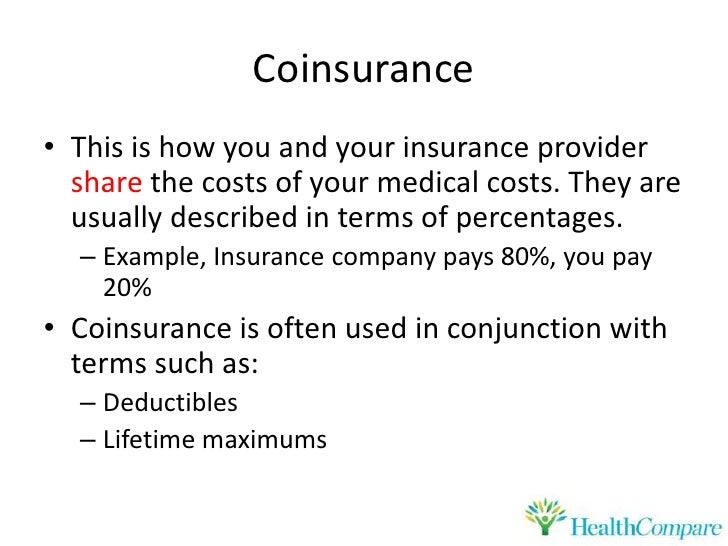
Co-insurance is a percentage of the cost of covered healthcare services that you are responsible for paying after you’ve met your deductible. Unlike co-pays, co-insurance is not a fixed amount; it varies depending on the total cost of the service. For example, if your co-insurance is 20%, and a medical procedure costs $1000, you would be responsible for $200 (20% of $1000), while your insurance company would cover the remaining $800.
Co-insurance applies after you’ve met your deductible, which is the amount you must pay out-of-pocket before your insurance coverage kicks in. Once you’ve met your deductible, your co-insurance will apply to all covered services until you reach your out-of-pocket maximum. This is the maximum amount you’ll have to pay for covered services in a given policy year. After you reach your out-of-pocket maximum, your insurance company will cover 100% of the cost of covered services for the remainder of the year.
Key Differences Between Co-pays and Co-insurance:
| Feature | Co-pay | Co-insurance |
|---|---|---|
| Amount | Fixed amount | Percentage of the cost |
| Timing | Paid at the time of service | Paid after meeting the deductible |
| Deductible | Not affected by deductible | Applies after meeting the deductible |
| Out-of-Pocket Maximum | Counts towards out-of-pocket maximum | Counts towards out-of-pocket maximum |
| Provider Type | Usually only applies to in-network providers | Applies to both in-network and out-of-network providers (but may be higher for out-of-network) |


Example Scenario:
Let’s imagine you have a health insurance plan with a $1000 deductible, 20% co-insurance, and a $5000 out-of-pocket maximum. You have a $25 co-pay for doctor visits and a $50 co-pay for specialist visits.
Scenario 1: Routine Check-up: You visit your primary care physician for a routine check-up. Your co-pay is $25, and this amount is paid at the time of the visit.
Scenario 2: Emergency Room Visit: You experience a medical emergency and require an ER visit costing $5000. You haven’t met your deductible yet. You will pay your $1000 deductible first. Then, you’ll pay 20% co-insurance on the remaining $4000 ($800). Your total out-of-pocket cost for this visit is $1800.
Scenario 3: Specialist Visit after meeting deductible: After meeting your deductible, you visit a specialist. Your co-pay is $50, and the remaining cost of the visit is $200. Your co-insurance is 20%, meaning you will pay $40 (20% of $200). Your total cost for this visit is $90.
Scenario 4: Surgery after meeting deductible: You undergo a surgery costing $10,000 after meeting your deductible. Your co-insurance is 20%, meaning you’ll pay $2000. However, since your out-of-pocket maximum is $5000, you’ve already reached it in the previous scenario, so your insurance covers the remaining cost.
Choosing the Right Plan:
Understanding co-pays and co-insurance is essential when choosing a health insurance plan. Consider your expected healthcare needs, budget, and risk tolerance. A plan with lower co-pays and co-insurance might be more suitable if you anticipate frequent healthcare visits. However, these plans often come with higher premiums. Conversely, a plan with higher co-pays and co-insurance might be more affordable in terms of premiums, but could lead to higher out-of-pocket costs if you require significant medical care.
To help you find the best plan for your needs, consider utilizing online resources like comparison tools and consulting with an insurance broker. Waukesha Health Insurance offers a range of plans to cater to diverse needs and budgets. Visit their website to explore their plan options and find the best fit for you.
Conclusion:
Co-pays and co-insurance are fundamental aspects of most health insurance plans. While they might seem confusing at first, understanding their differences and how they impact your healthcare costs is crucial for making informed decisions and managing your healthcare budget effectively. By carefully considering your healthcare needs and financial situation, you can choose a plan that provides adequate coverage while aligning with your budget. Remember to always review your plan documents thoroughly and contact your insurance provider if you have any questions. Contact Waukesha Health Insurance today for personalized assistance with choosing the right plan for you. Don’t hesitate to utilize the resources available to you to ensure you are making the best choices for your health and financial well-being.